Hope for Democracy

We, the people are in charge.

We're here to shake up Americans to the possibility that we can, today, start making our decisions wisely (instead of poorly), and take action through alternative self-governance — even within a captured system.

Cross-partisan — We balance red, blue, and independent in funding, team, leadership and membership. All sides in the room. Achieving real power depends on bridging the partisan divide.

Let's stop living as victims. It's time to take action.

George Washington warned: political parties would destroy the republic. Will we now listen? The two-party system doesn't just occasionally fail us — its design rewards extremism and punishes compromise and truth-telling. Research1Gilens & Page (2014), "Testing Theories of American Politics." Analysis of 1,779 policy outcomes found that average citizens have near-zero independent influence on policy — economic elites and organized interest groups drive outcomes. confirms what we feel: average citizens have near-zero measurable impact on policy. It isn't “the other side” — it's the incentives.

Let's take some of the $27.6 billion2$27.6B — total U.S. political market, 2024–2026 cycle.

Sources:
$15.9B federal electoral — OpenSecrets, 2024 Cycle Analysis
$5.3B 2025 federal lobbying — Bloomberg Government, April 2026
~$10.8B policy advocacy + ~$0.9B systemic reform — FEC filings & CREW

More →
we spend fighting “the other side” and spend some time building.

Think it can't work?

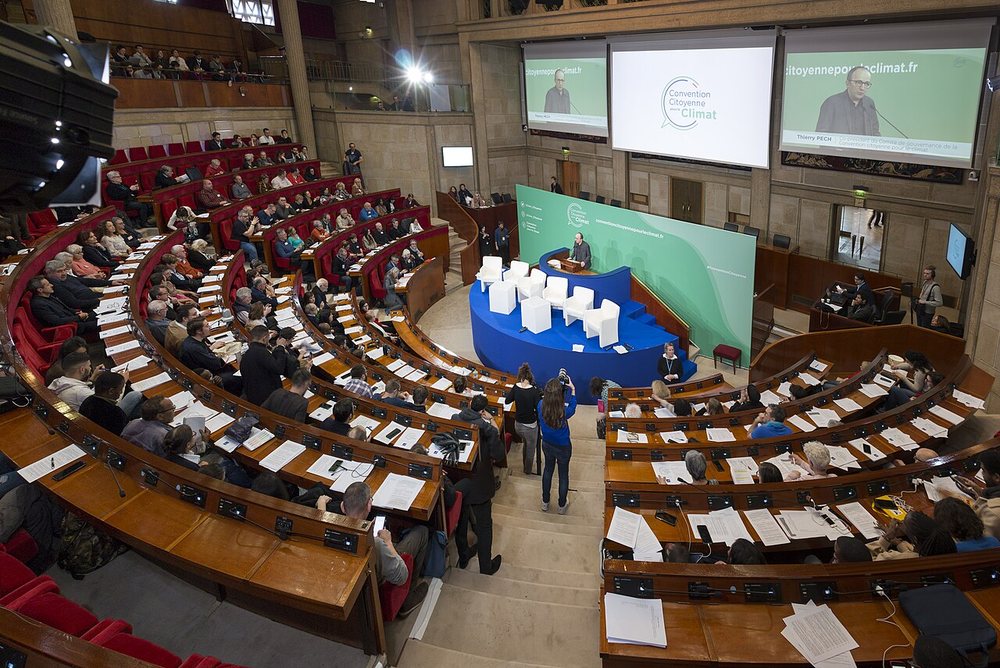
99 randomly selected Irish citizens — across age, gender, politics, and belief — spent five weekends deliberating one of the most divisive issues in their country's history. They reached 87% unity on their recommendation. The national referendum followed, on their proposal, and it won in a landslide. The process was remarkably peaceful — because the assembly had already done the hard work of reconciliation.

Deliberative methods work — and over 100 citizen assemblies have been convened in the US. One example: in 2002, 5,000 New Yorkers set the course for what became the 9/11 memorial district.   

Interest is exploding. Now is the time to organize for real political power — outside the captured system.

Take the next step

We're raising seed funding and building a founding community.

See below for our approach, as we partner with organizations in the national movement.

Read the Full Plan

Read our model: how citizens can take power, with good governance.

Read on →

Stay in the Loop

We'd love to share our questions, news, and have you involved.

Get Updates

Book a Call

Potential seed donors — schedule 30 minutes with Brian to hear the full vision and add your thoughts.

Book a Call →

Watch the Lightning Talk

5 minutes. Get the core concepts in one go.

Watch →

Donate

Invest in our future. Tax-deductible.

Donate
Still reading? Thank you. Watch the lightning talk, or read more details below…

§The Founders Warned Us

We revere the architects of American democracy. We've forgotten their sharpest warning.

Political parties would destroy the republic. We haven't heeded that, but the flaws in the system have become undeniable.

Founders designed a system built on debate, compromise, and citizen deliberation — and they expected future generations to keep innovating. Instead, we got exactly the disease they feared most.

The good news? The American people do value innovation. We've demonstrated creative brilliance, resolve, and perseverance, time and time again. It's time we turn that attention to how we self-govern.

"I am no believer in the amalgamation of parties, nor do I consider it as either desirable or useful for the public."

"A division of the republic into two great parties … is to be dreaded as the greatest political evil."

"Political parties are the 'most fatal disease' of popular governments."

— Later voices, same warning —

"Power concedes nothing without a demand. It never did and it never will."

"In the councils of government, we must guard against the acquisition of unwarranted influence — whether sought or unsought."

“”

Deliberation — when people (citizens randomly selected, open to all, or elected officials with the space to do it) do real research, hear each other out, and reach considered decisions together. People come in with opinions — but first-person testimony and research sharpen the decisions they reach. Software, or unbiased facilitators, can help run the process; they don't make the decisions.

§Three Ways Citizens Assert Power

Unlike the billions spent in the “outrage industrial complex”The “Outrage Industrial Complex” — the for-profit and non-profit ecosystem that profits from partisan division. Media running on outrage. Lobbyists that benefit from gridlock. Politicians whose careers depend on having an enemy. $27.6 billion per cycle turning citizens into tribal teams and policy into theater — and only ~3¢ of every dollar goes to repairing the system itself.

Full market analysis →
trying to get change made with the system, our approach isn't about getting politician or legislature approval. Citizens already have tools to self-govern — and our power, when we do, is enormous.

1

Make Direct, Coordinated Acts of Speech

A crowd, coordinating, can be very powerful — especially when it legitimately speaks for the whole district.

Expand

There's something dramatically different about the voice of a whole city or district — citizens gathered across the political divide. Unlike special-interest lobbies, a cross-partisan citizen group carries moral high ground — and we intentionally build groups with that legitimacy, then take visible stands together.

What we do:

  • Coordinated social media campaigns
  • Op-ed pieces and large ads in local papers
  • Jointly signed letters to elected officials

And we invite officials to something different from the grandstanding of a public hearing: an adult conversation. Citizens set the agenda — we ask a real question, not a gotcha. "Will you sit down and speak with us?"

Won't appear? We broadcast the cowardice. Won't stay on topic? Same.

A variation — acts of "collective will": the same cross-partisan group decides how to spend a pooled budget. Citizens choosing how to allocate a small donor-raised fund — an on-ramp into real deliberative practice.
2

Citizen Initiatives for Deliberative Governance

Citizens can pass city, county, or state initiatives that build in — permanently — a legitimate voice for the district. Town hall “yell-fests” and decisions made by council people in the dark corners of city hall can be replaced by adult, deliberative conversations.

Expand

Citizen ballot initiatives are powerful — but too often captured by special interests. Our approach crowdsources initiatives from cross-partisan citizens, so the voice at the table is legitimately the district's.

Roughly 25 states have paths for citizens to introduce deliberative bodies into governance — with no input needed from elected representatives. Countless cities, counties, and school boards have charters that can be amended the same way.

An example initiative we'd support:

  • The city or state must convene a citizen assembly once per year — meeting 4–6 Saturday mornings.
  • The assembly picks a topic, deliberates, and produces a policy recommendation. Lawyers are funded to draft the actual bill.
  • The relevant council or legislature must vote on it, up or down. If they don't, the measure goes automatically onto the next ballot for citizens to decide.

Local citizens draft the details. We remind people that THEY have the power — and once they're enrolled in that vision, we help them take it.

3

Control Electoral Outcomes — The Lever

A cross-partisan voting bloc that can swing close races. State or federal.

Expand

How a few hundred citizens can change everything. In competitive districts decided by razor-thin margins, a small coalition — Republican, Democrat, and Independent — who commit to voting together holds the balance of power.

<1.5%
of voters — NRA peak

The NRA had fewer than 1.5% of voters at its peak — and blocked gun control for decades, even when 70% of Americans supported it. Their secret: members spanned both parties and voted as a disciplined bloc. We're applying the same arithmetic to a very different end.

Federal — Arizona 1st District
3,200vote margin
~1,100citizens needed

Held by just 3,200 votes. A cross-partisan coalition of ~1,100 organized citizens would have held the balance of power.

State — Pennsylvania HD-72
1,001vote margin
~350citizens needed

Decided by 1,001 votes. A disciplined bloc of ~350 cross-partisan citizens would have been decisive.

And while "election reform" has never reached the table as a top priority, we believe this is a very different story — far more revolutionary than advocating within the system for tweaks. This is about the people taking back their power.

Mechanical Advantage: How a small margin moves the whole district U.S. House hemicycle showing the 2-vote margin

§Deliberative Methods Produce Better Results

People who have worked with deliberative bodies of random citizens report that they simply far outperform our “expert politicians.” See these four examples from among hundreds.

Ireland's Citizens' Assembly on Abortion

2016–2018 · One of the most divisive issues in Irish society

99 randomly selected citizens — a cross-section of Irish society across age, gender, geography, and belief — spent five weekends hearing from medical experts, legal scholars, and women with lived experience.

Many arrived undecided or conservative. Through structured deliberation, they reached a recommendation far bolder than any politician had dared propose.

The national referendum that followed passed in a landslide — and the process was remarkably peaceful. The assembly had already done the hard work of reconciliation.

  • 99 randomly selected citizens
  • Diverse on politics, age, gender, race, income
  • Met over 5 weekends
  • Reached 87% unity on their decision
  • The national vote followed … 66% voted Yes
And this isn't just an Irish story. There are hundreds of examples of citizen-assembly-style bodies in the United States — city, county, and state. The essential ingredient, in every one that works: the group represents the real diversity of the district, politically and otherwise. And they take real time to listen to each other.

§What We're Building

We support three interlocking efforts — each designed to make the others more powerful.

1

Spark the Conversation

Most Americans have never seriously considered that democratic alternatives are possible. We change that — through storytelling, media, and public dialogue that makes the idea impossible to ignore.

2

Foster Real Demonstrations

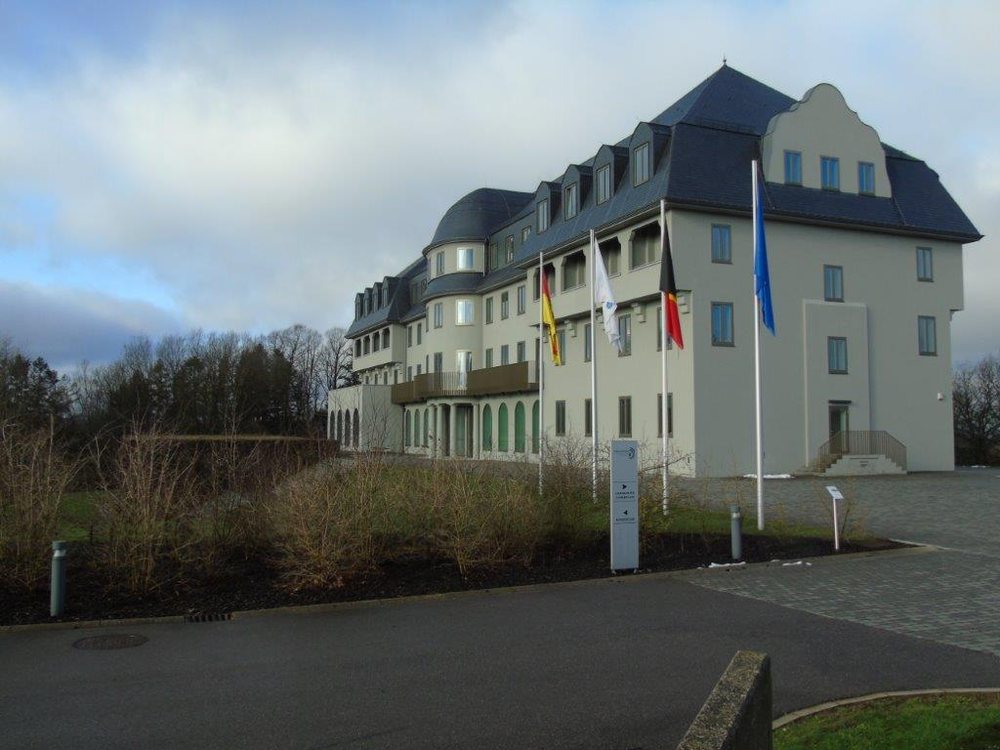
Fund and support citizen assemblies and deliberative experiments — in swing districts, online, locally. Every experiment produces evidence and momentum. The Belgium model didn't start as national policy; it started as a proof.

3

Organize for Power

Citizens voting as a cross-partisan bloc, rewriting local charters, and putting deliberative democracy on state ballots. This is how it becomes permanent. No politicians' permission required.

§Nuts and Bolts

Three ways we start a campaign — issue-led, community-led, or identity-led. For each, we partner with organizations that handle facilitation (online, live Zoom, or in-person), test for grassroots uptake (aim for k > 1 — each participant brings more than one along), and always run red, blue, and other/independent fronts in parallel. When a campaign is working, we take it to the supporter list.

A

Issue-led campaigns

A bridging issue we both want fixed — and politicians won't touch.

Expand

Issues where reds and blues actually agree — sometimes overwhelmingly — but the system isn't built to deliver. A cross-partisan citizen coalition is.

  • Sensible AI policy
  • Veterans' health
  • National debt
  • Protecting Social Security
  • Prescription drug costs
Why we lead with these: they're the expected entry. People can name the problem in one sentence. Easiest grassroots traction; clearest "win" condition.
B

Community-led bridges

Two communities that wouldn't otherwise talk, sharing one thing they both love.

Expand

Start with the shared interest. Build trust. Then we have a community ready to deliberate on something harder.

  • Church choirs (often red-leaning) paired with song circles (often blue-leaning)
  • Local businesses across the political map
  • Sports leagues, garden clubs, hobbyist groups — any bridging-interest community
Why this works: the politics is downstream of the relationship. People who've already sung together (or built a business together) deliberate differently than strangers across a town hall.
C

Identity hooks

A life-stage identity that crosses the divide.

Expand

Identity hooks cut through tribal politics. A new mom is a new mom on either side. Organize around the shared identity first, then politics.

  • New parents
  • Grandparents
  • People who have recovered from cancer
  • Veterans
  • Small-business owners
Hypothesis: these may attract more attention than issue-led campaigns — the identity is sticky, sharable, and emotionally resonant. We'll test against the issue-led path side by side.

§A Virtuous Cycle

Each success makes the next one easier. That's how movements scale.

Hope Restored Spark the Conversation Foster Alternatives Pull the Lever sparks curiosity builds credibility proves it's possible Each win fuels the whole cycle

Conversation spreads awareness and creates demand for experiments. Experiments prove common ground is real, attracting people to the lever. The lever's impact — elected officials actually listening — proves change is possible.

That proof restores hope. Hope fuels more conversation. The cycle accelerates.

Donors and volunteers arrive. The network grows. And the idea that citizens can govern themselves stops being idealistic — and starts being obvious.

§How This Is Different

Most political effort in this country works inside the existing system — lobbying, campaigning, advocating for better candidates, hoping the right people win. Billions are spent, fighting the other side.

We're doing something structurally different. We focus on organizing alternative local civic infrastructure, where people learn to make decisions and take action, with deliberative methods at the center.

None of this requires politicians to want to change. It requires citizens to stop asking permission.

Cross-Partisan Throughout.

Everything we do must be balanced across the political divide. The voting coalitions only have leverage if they span liberal and conservative — that's the entire mechanism. A coalition of only progressives has zero additional power; their votes are already locked in. The power comes from crossing the aisle.

So we don't just aspire to balance — we require it, structurally, at every level.

Funding

Every million capped at 50% from each side

Leadership

Our board and leadership will ensure red, blue, and independent voices have equal power (since each is roughly a third of eligible voters).

Coalitions

Voting blocs must include balanced R, D, and Independent participation to have leverage

Every Experiment

Significant liberal + conservative + independent participation in every initiative. All sides, always.

Founding Team

We will not launch publicly without a named conservative co-chair on the founding board.

§About the Founder

Brian Burt, Founder of Hope for Democracy

Brian Burt has spent 20+ years leading multi-million-dollar technology projects, starting companies, and leading teams to successful launches.

He founded and ran MaestroConference for 12+ years — working closely with the Obama White House and campaigns on 30,000 events (including 50+ with the President and Michelle personally), and serving customers including Airbnb, the World Bank, Stanford, and hundreds of other nationally respected organizations. He invented breakout groups for conferencing, holds three patents, and exited the business in 2022.

Before MaestroConference, he led Charles Schwab's first AI-driven personalization system (serving billions of messages to 20M users monthly), and later managed a $25M+ portfolio at the Federal Reserve Bank.

Brian's career has spanned administrations and sectors — Wall Street, central banking, civic tech, and presidential-level convening.

Working on a solution based on citizens rather than politicians gives me tremendous hope. But to make this happen, we need a lot of people to contribute either with their time or resources, and join the effort. Will you join us?

— Brian Burt, Founder

Get Updates Book a Call Watch
💬 Your feedback
Hope for Democracy · we're listening

Thanks for taking a look at our homepage. We'd love your honest reaction.

Select any text on the page to comment on that exact spot — or use the box below for a general thought.
General feedback

Your comments (0)

No comments yet — highlight some text, or add a general thought above.